|
Article Courtesy of The
Naples Daily News
By Laura Leyden
Published August 15, 2024
|
A
proposal to tweak rules for golf course conversions in Collier County has gone
back to the drawing board.
On Thursday, the county's planning commission unanimously agreed more work is
needed.
County staff drafted the changes based on direction from county commissioners,
who in part are trying to make the rules more legally defensible.
|
The current rules,
adopted in 2017, have triggered three property rights claims
under the state's Bert Harris Act by developers and
landowners, who see the requirements as overly burdensome.
Two lawsuits are pending against the county.
County commissioners are looking for ways to avoid more
lawsuits and to streamline the application process for
converting golf courses to other uses.
The planning board felt the revisions county staff offered
up went too far, however, and would mostly benefit
developers, not the surrounding neighbors they're designed
to protect.
"It seems like this is pretty one-sided," said Joe Schmitt,
the board's vice chairman. |
|
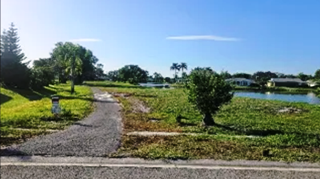
Image of Riviera Golf Course
|
He
recalled the hard work that went into establishing the rules in the first place
– and he argued the application process for conversions wasn't ever intended to
be easy.
Edwin Fryer, the planning commission's chairman, shared Schmitt's "misgivings"
about the proposed changes, even questioning the need for them.
"If it ain't broke, don't fix it," he commented. "I think the system is working
pretty well."
While he understood county staff is just trying to answer its "bosses," he said
the result of its work seemed to be a "significant tilt" in favor of developers.
"I find that very worrisome," he added.
What did the proposed changes include?
The revisions included removing an intent-to-convert application process as an
initial step. The step came with a host of requirements, including holding two
stakeholder meetings, exploring a sale of the property to the county or
homeowner associations, and presenting alternative proposals for the property.
Other changes would have removed a 35% open space requirement and watered down
the width requirements for a greenway. The purpose of the greenway is to provide
open space along the outer edge, next to existing residential development.
On the whole, the proposal would have trimmed the rules from nine pages to two.
Mike Bosi, the county's planning and zoning director, said many of the
requirements didn't seem necessary or weren't working as intended, including the
initial stakeholder meetings, where opposing sides never seemed to want to
compromise, remaining "entrenched" in their positions, instead of finding a
middle ground.
"We just really minimized the prescribed activities that are going to be
required," he said.
Earlier this year, county commissioners had a serious conversation about
eliminating the entire process because of the legal issues it's caused, Bosi
told the planning commission.
The rules, he said, are primarily aimed at golf courses that aren't part of
planned communities because they can be easier to rezone and develop over the
objections of neighbors, with less protections and restrictions in place. There
are nine such courses, out of 72, in the county's jurisdiction, Bosi emphasized.
Planning board favors minimal changes
Planning commissioner Chris Vernon said he wanted to protect as much of the
existing conversion process as possible, but he acknowledged county
commissioners aren't likely to keep it the same. So, he suggested at least
supporting a few changes to address their concerns.
"They want to change this thing," Vernon said. "I don't think we are going to
convince them that they are just wrong on that point."
If the pendulum swings too far in the other direction, however, he warned the
county could then face Bert Harris claims from homeowners whose property values
are impacted by losing their open space and golf course views.
He suggested county staff should take a "scalpel" to the rules, instead of a
"hatchet." Other planning commissioners agreed.
Heidi Ashton-Cicko, an assistant county attorney, told the planning board the
legal team defending against the Bert Harris claims had only suggested revising
or adding one sentence to make the rules less litigious.
That one sentence would clarify there's flexibility in the width of the required
greenway. In both lawsuits, developers have argued that without that flexibility
the requirement is too onerous, as a way to give credence to their property
rights claims, Ashton-Cicko explained.
Residents opposed the changes
Residents who have fought to preserve golf courses in their neighborhoods
opposed the sweeping changes. Several spoke out at the hearing, including Peter
Osinski, a board director of the Riviera Golf Estates homeowners association.
The association has fought to preserve the Riviera Golf Course in its community
for years. The course has been closed since April 2022, with its owners tied up
in litigation.
"We contend that these proposed regulations unnecessarily negate the substance
and spirit of the golf conversion regulations to the obvious detriment of
neighboring property owners and to the clear benefit of developers intent on
building high density housing on small or narrow land tracts precisely like the
Riviera Golf Course property," Osinski told the planning board.
The association couldn't help but question why the proposed changes were so
"clearly hostile" to its residents' "quality of life, security, safety and
property values," he said.
"Accordingly, some of us have wondered if this is a bureaucratic overreaction to
a board (of county commissioners') request or is there another agenda at play
here?" he added.
What's next for this Collier golf course conversion issue?
Commissioner Schmitt offered up seven points for county staff to consider in
rethinking the rule changes before the proposal to modify them comes back to the
planning board. His suggestions included dropping revisions that would have
allowed greenways to be an average of 50 feet in width (instead of 100), while
keeping a minimum number.
Although he agreed the intent-to-convert-process requiring two stakeholder
meetings as it exists today might be too cumbersome and might need to be
eliminated, Schmitt emphasized at least one neighborhood meeting should be
required before a rezoning application can be filed with the county, giving
nearby residents a heads up, and an opportunity to learn more about the plans
and to offer their feedback.
He suggested a few changes to clean up and clarify the language of the
conversion rules.
"If you want to cull this down somehow, OK," Schmitt said. "But we still cannot
throw out the intent."
The planning board continued the matter indefinitely.
Before it comes back to the board, county staff will work with the board's
chairman behind the scenes to make the changes based on two filters,
streamlining the application process and minimizing "Bert Harris exposure."
After the hearing, Osinski said residents of Riviera are pleased by the board's
direction.
"Overall, we were greatly encouraged by the planning commission's clear intent
to preserve the golf course conversion regulations," he said.
|