|
Article Courtesy of The
Orlando Sentinel
By Natalia Jaramillo
Published December 23, 2024
|
|
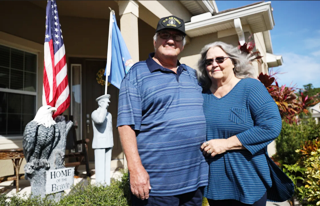
When retirees Becky
and James Turner moved into Parkview at Lakeshore six years
ago, they hoped they had found their dream: A home they
could enjoy in their twilight years, then pass on to one or
more of their four children and 11 grandchildren.
It hasn’t turned out that way, and they blame the poor
management and escalating fees on the elected board that
oversees their private community. Their annual charge has
skyrocketed from $2,800 in 2021 to $4,650 this year, forcing
the couple — who live on a fixed income — to sell their
second car, spend their days triple-checking for the best
grocery deals, and make fewer trips to see the
grandchildren.
Built in an unincorporated part of Osceola County near
Kissimmee in 2005, Parkview is governed as a community
development district, or CDD, which under state law is
responsible for maintaining the over-500-home community and
its amenities with fees paid as part of tax bills. |
|
|
While the higher fees ought to ensure a well-maintained community, the
Turners and many of their neighbors say, the playgrounds, the pool and lawns
at Parkview have never looked worse.
“When I look at this neighborhood in 15 years, when I leave it to one of my
children or grandchildren, I don’t think I’m going to be very comfortable
because it’s being run down and it will continue to get worse,” said Becky
Turner, whose one-story, single-family home is adorned with American flags.
In the subdivision, where tidy townhomes and detached houses contrast with
the community facilities in obvious disrepair, many residents have similar
stories. Now they’ve banded together to try to throw out the majority of
their governing board.
Tensions are running high — a recent homeowners association meeting devolved
into shouting and the police had to be called to calm things down. Board
chairman Victor Cruz says the board’s critics just don’t understand how CDDs
work, and blames financial problems on previous boards.
These sorts of conflicts are an occupational hazard in Florida neighborhoods
governed by CDD boards and homeowners associations, said Andrea Anderson, a
lawyer who specializes in HOA and CDD law and has worked on similar cases in
the Kissimmee area.
“Florida law gives the association, the board of directors, a tremendous
amount of power,” Anderson said.
HOAs and CDDs are both run by elected community members — but an HOA focuses
more on aesthetics while a CDD handles larger projects such as
infrastructure. A CDD can also raise funds by issuing bonds and acquire or
dispose of real and personal property.
Parkview has both governing structures, but its HOA and CDD are overseen by
the same board. The district has $6.3 million in total debt, according to
Cruz, which generally has been spent to maintain and improve the
neighborhood and its infrastructure. The debt is paid down by the fees.
“They completely ignore us when we ask for things like ‘How do we get an
audit?’” Becky Turner said about the board members. “Where did this money
go?”
As a result, Parkview residents filed petitions Nov. 25 with the Osceola
supervisor of elections asking to recall Cruz, Vice Chair Badia Strachan and
Secretary Cesar Goyetche. The petitions included signatures of 153
residents. Residents claim, and tax records suggest, that those three board
members haven’t paid their own CDD fees since 2022, but Cruz says that is
not true.
In a possible sign of more problems, a representative of Avid, the property
management company hired for Parkview, said there are issues with the annual
audit and the company doesn’t intend to renew its contract with the CDD —
currently in its first year. Avelino Vide, Avid community manager for
Parkview, cited discrepancies in the figures for CDD expenses and revenues,
and said that board members don’t communicate directly with Avid or involve
it fully in maintenance contracts or capital projects, actions he calls
“concerning.” Avid manages over 100 properties in Florida, and Vide says the
issues they have had at Parkview are very unusual.
“I feel weird not renewing it right now because it looks like we’re running
from something,” he said. “But I don’t feel comfortable with the contract.”
To appearances, the community is sorely in need of better oversight.
As residents and visitors enter Parkview at Lakeshore, broken mailboxes lie
on their sides in front of a row of townhomes. Many roads through the
neighborhood have large, unpaved patches, and vacant lots where homes have
not been built are covered in litter.
The amenities are little better. The neighborhood’s parks feature large
empty fields with broken soccer nets. Next to the community pool stand
stacks of discolored pool chairs. Along the back of the neighborhood lies a
harbor view of Lake Toho, but the unfinished dock is blocked off with
caution tape.
Tamika Harold has been leading the recall effort — gathering signatures,
rallying residents and attending CDD meetings. Harold’s fees have soared, as
well. In 2021 she paid $2,733 and this year they’re over $4,500. Fees vary
with lot and home size; some residents pay more than $7,000.
“I want criminal charges to be filed and for the board members to take
responsibility,” Harold said, who lives in a two-story home and recently
added a pool to her backyard. “This was my dream house in my dream
neighborhood.”
Kari Ewalt, a spokesperson for the Osceola supervisor of elections, said the
board members can resign or file counterpetitions with a greater number of
signatures from residents to remain in office and forgo an election. The
office is verifying signatures but it appears residents have enough to
warrant an election, she said.
Cruz blames the increasing fees on inflation and debt accumulated by past
board members. He said community maintenance has been a challenge because
the board had to spend money on larger projects, including roughly $24,000
to fix irrigation issues and over $200,000 to fix a sinkhole. Cruz said
additional funds are going to build a community dock that was part of the
original master plan and a “selling point.” It’s not finished and he didn’t
know the final price tag.
“I ran for the board to better the community and I share a lot of concerns
with the residents,” Cruz said in an interview with the Sentinel. “I want to
fix what the previous board did.”
Goyetche and Strachan didn’t respond to requests for comment by email and
phone.
But board member Walter Klass said there’s a culture of “yes men” on the CDD
who agree with Cruz without questioning decisions.
Klass, elected in 2020, said when he first joined the board he was informed
where money was spent but that slowly stopped. Now, he said, Cruz doesn’t
bring projects to the board for approval and won’t answer questions.
“Victor is running the show … the money goes into his preferred projects and
the other members just agree,” he said.
|