|
Article Courtesy of
Doral Family Journal
Published June 15, 2026
|
|
|
DORAL – The City of
Doral has taken a significant step toward addressing one of
its residents’ most recurring concerns by approving the
HOA-COA Fraud Detection Program, a pilot initiative designed
to help identify potential cases of financial fraud within
homeowners associations (HOAs) and condominium associations
(COAs). The
program seeks to create a structured mechanism through which
residents can submit complaints related to potential
financial irregularities within their communities, allowing
authorities to evaluate whether sufficient evidence exists
to initiate a criminal investigation.
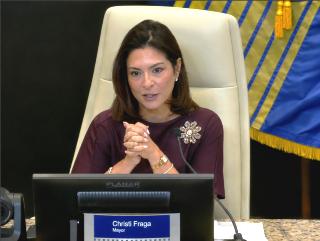
During the presentation of the proposal,
Mayor Christi Fraga explained that the program was developed
in response to a growing need among residents facing
situations involving alleged financial misconduct within
their associations. |
|
|
Fraga emphasized that when complaints rise to the level of potential financial
fraud, organized schemes, or improper solicitations—particularly those affecting
vulnerable populations—the Police Department has a responsibility to
investigate, provided there is sufficient evidence to support the allegations.
|
The mayor clarified
that the program is not intended to intervene in
administrative disputes or internal association conflicts,
such as the enforcement of rules and regulations,
disagreements with board members, or election outcomes. Its
purpose is to determine whether a crime has occurred and, if
so, facilitate the development of an investigation that
could lead to legal action.
“Our residents’ largest asset is their home,” Fraga stated.
“When financial irregularities or the improper management of
funds occur, the impact is real and can become a significant
economic burden for families.”
The initiative will initially operate as a one-year pilot
program, during which the city will absorb the costs
associated with training and specialized external financial
auditing support. During this period, data will be collected
regarding the number of cases received, the resources
required, and the feasibility of implementing the program on
a permanent basis. |
|
Doral Mayor Christi Fraga
|
According to Fraga, at the conclusion of the pilot period, the city will
have concrete information to determine whether funding mechanisms,
cost-recovery structures, or specialized personnel dedicated exclusively to
these types of investigations will be necessary.
The mayor also used the opportunity to emphasize the need for legislative
reforms at the state level. She announced that she will continue promoting
community workshops and public education efforts aimed at advancing legislative
changes that strengthen oversight and accountability within homeowners and
condominium associations.
She also expressed concern regarding Community Development Districts (CDDs),
noting that these mechanisms often increase costs for property owners for years
and stating that she does not support the creation of new CDDs or the expansion
of existing ones.
|
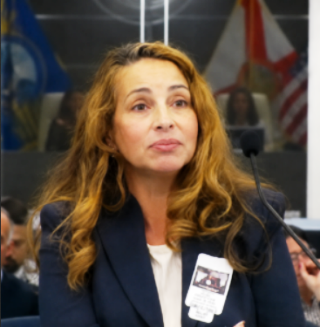
Tamara Reyes, founder
and president of South Florida Property Owners Consulting
and a former Miami-Dade Police Department sergeant
specializing in economic crimes, who participated in the
presentation of the program, explained that complaints
involving homeowners and condominium associations continue
to increase and that many residents face difficulties
obtaining answers when they suspect potential financial
irregularities.
According to Reyes, one of the primary challenges is that
fraud investigations involving associations are
significantly more complex than traditional criminal cases.
While crimes such as vehicle theft or burglary are often
evident from the outset, association-related cases first
require investigators to determine whether criminal conduct
actually occurred and then identify how it took place.
Reyes noted that many residents either do not have access to
financial records or lack the knowledge necessary to
interpret financial statements and accounting documents. As
a result, suspicions often arise that require specialized
review to determine whether funds have in fact been
misappropriated.
The expert explained that, on numerous occasions,
investigations that initially appeared to reveal no
irregularities ultimately uncovered hundreds of thousands of
dollars in allegedly misappropriated funds. These losses can
result in special assessments for property owners, increased
fees, and, in some cases, foreclosure risks for those unable
to absorb the additional costs. |
|
Tamara Reyes
|
For this reason, she emphasized the importance of establishing clear complaint
intake procedures, training law enforcement personnel, and providing residents
with a centralized location where they can present their concerns without having
to navigate multiple government agencies in search of assistance.
A New Resource for Residents
The HOA-COA Fraud Detection Program represents an innovative effort by the City
of Doral to address an issue that directly affects the financial stability and
quality of life of many residents.
City officials emphasized that the program does not guarantee that every
complaint will result in an investigation or prosecution. However, it will
provide a formal mechanism for evaluating potential fraud cases and create a
pathway to accountability where many residents currently believe a gap exists.
Through this initiative, Doral aims to become a model for other municipalities
facing similar challenges related to the financial oversight of homeowners and
condominium associations. |